
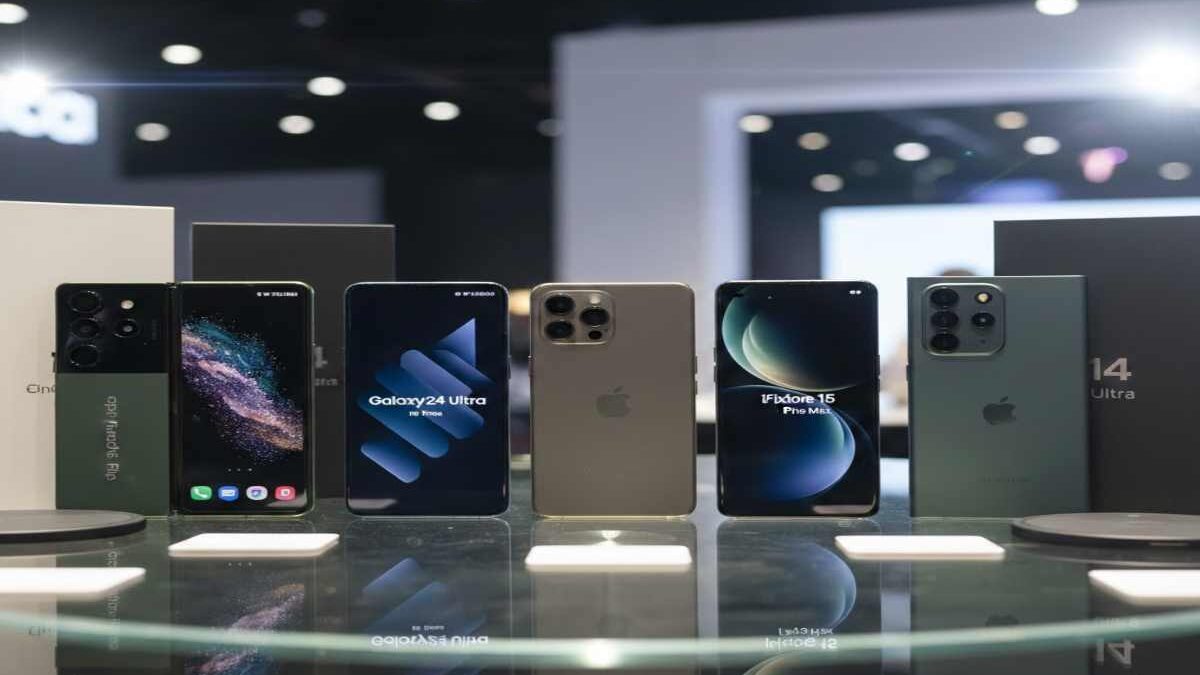
Latest Smartphone Launches
Smartphones in 2026 are smarter, faster, and more AI-driven than ever. With each new launch, brands compete on performance, camera quality, battery life, and AI features. But with so many options, choosing the right one can be overwhelming.
This guide covers:
- The most recent flagship and mid-range launches
- Key specs and feature comparisons
- AI innovations shaping new phones
- Pros and cons of each model
- Smart buying tips based on your needs
Table of Contents
Quick Summary
Launched:
- Samsung S26 series
• Motorola Signature
• Pixel 10a
• iQOO 15R
• Nothing Phone (4A) series
Coming Soon:
- Samsung Galaxy S26 Ultra
• Vivo V70 / X200T
• Infinix Note 60 Pro
• Realme 16 lineup
• Oppo Find N6 foldable
Smartphone launches in 2026 blend premium performance, impressive camera tech, and broader adoption of AI features making it one of the most exciting years for both flagship and mid-range buyers.
Recent Launches Smartphone Launches (2026)
In India and Global
1. Google Pixel 10a
Key Highlights
Launch & Availability
- Officially launched on 18 Feb 2026 and goes on sale in India from 6 Mar 2026.
- Pre-orders already open via online channels like Flipkart and Google Store.
Price & Options
- Comes mostly in a single 8 GB RAM + 256 GB storage configuration in India (~₹49,999).
- Available in multiple color options: Lavender, Berry, Fog, and Obsidian.
Design & Display
- Display: 6.3-inch Actua pOLED screen with Full HD+ resolution and up to 120 Hz refresh rate — bright and smooth for everyday use.
- Build: Corning Gorilla Glass 7i protection and a sturdy aluminum frame.
- Durability: IP68 dust- and water-resistance rating (good for splashes and brief submersion).
Performance & Software
- Chipset: Google Tensor G4 — same processor family found in higher-end Pixel 10 models.
- RAM & Storage: 8 GB LPDDR5X & 256 GB UFS 3.1 storage.
- Operating System: Ships with Android 16 and promises up to 7 years of OS and security updates — one of the longest support lifespans in the segment.
Camera System
- Rear Cameras:
- 48 MP main sensor with optical image stabilization (OIS).
- 13 MP ultra-wide lens for expanded framing.
- Front Camera: 13 MP for selfies and video calls.
- AI Photography Features: Includes features like Camera Coach, Auto Best Take, and other Google AI tools for enhanced shots.
Battery & Charging
- Battery: Large 5,100 mAh battery for solid all-day usage.
- Charging:
- 30W wired fast charging.
- 10W wireless charging (a notable addition in this class).
Connectivity & Extras
- 5G support along with Wi-Fi, Bluetooth, NFC, USB-C, and GPS.
- Satellite SOS support — helpful for emergencies in areas with no cellular coverage.
- Titan M2 security chip for enhanced device protection.
Why It Matters in 2026
- The Pixel 10a aims to bring many flagship-level features (like long-term software support, AI camera tools, and wireless charging) into the mid-range price segment.
- Its balanced approach makes it a strong choice for users who want Google’s clean Android experience + good performance + years of updates without spending flagship money.
2. Vivo V70 & V70 Elite
Launch Overview
- Both phones officially launched in India on 19 Feb 2026 and went on sale from 26 Feb 2026 through Vivo’s online store, Flipkart, Amazon and retail outlets.
- They build on the strengths of Vivo’s V-series with improved camera hardware (co-engineered with ZEISS), large batteries, fast charging, premium design, and long-term software support.
Display & Design (Both Models)
- 6.59-inch 1.5K flat AMOLED display with 2750×1260 resolution, 120 Hz refresh rate, up to 5000 nits peak brightness, and P3 wide colour gamut — bright and smooth visuals for gaming and media.
- Thin bezels and aerospace-grade metal frame for sturdy premium feel.
- Both phones have IP68 and IP69 ratings for dust and water resistance.
Performance & Software
Vivo V70
- Processor: Qualcomm Snapdragon 7 Gen 4 (solid mid-range chip for everyday use and casual gaming).
- RAM & Storage: Typically 8 GB RAM + 256 GB UFS-4.1 storage.
Vivo V70 Elite
- Processor: Qualcomm Snapdragon 8s Gen 3 (stronger performance for gaming, multitasking, and heavy apps).
- RAM & Storage: Up to 12 GB RAM + 512 GB UFS-4.1 storage.
Both run OriginOS 6 based on Android 16, and Vivo has promised 6 years of security updates (and 4 years of OS feature updates).
Camera System
Both models share the same advanced camera setup, tuned with ZEISS optics:
- Triple Rear Cameras:
- 50 MP Sony IMX766 main sensor with Optical Image Stabilisation (OIS)
- 50 MP telephoto camera with OIS (3× zoom)
- 8 MP ultra-wide lens
- Front Camera: 50 MP autofocus selfie camera
- Video: Up to 4K @ 60 fps recording with zoom clarity
- AI Camera Features: Includes creative AI tools such as AI Floral, AI Magic Weather, and localized AI Holi Portrait effects.
This camera focus, especially the telephoto and portrait capabilities, is one of the standout points for photography fans in this segment.
Battery & Charging
- Battery: Large 6500 mAh cell for long endurance.
- Charging: 90 W fast charging support.
Vivo claims a full charge can support many hours of navigation, video playback and extended 4K recording.
Pricing (India)
Vivo V70
- ₹45,999 – 8 GB + 256 GB
- ₹49,999 – 12 GB + 256 GB
(Color options: Passion Red, Lemon Yellow)
Vivo V70 Elite
- ₹51,999 – 8 GB + 256 GB
- ₹56,999 – 12 GB + 256 GB
- ₹61,999 – 12 GB + 512 GB
(Color options: Passion Red, Sand Beige, Authentic Black)
These prices place the V70 series against other mid-to-upper mid-range rivals like Samsung A-series, iQOO, and OnePlus offerings in 2026.
Verdict
Vivo V70 – Great choice if you want a balanced mid-range phone with large battery, smooth display, strong camera focus, and everyday performance.
Vivo V70 Elite – A better pick if you want extra performance (Snapdragon 8s Gen 3), more storage/RAM, and enhanced overall responsiveness for gaming and heavy multitasking.
Both phones offer a compelling mix of battery life, camera capabilities, durability, and long software support, making them strong contenders in the 2026 mid-range smartphone lineup.
Major Flagship Smartphones Launches 2026
3. Samsung Galaxy S26 Series
Launch & Event
Global reveal: The Galaxy S26 series is scheduled to be officially unveiled at Samsung Galaxy Unpacked on 25 February 2026.
Pre-orders and reservations have already begun ahead of the launch event.
Lineup Composition
The series is expected to include three core models:
- Galaxy S26 – Standard model
- Galaxy S26+ – Larger screen & battery version
- Galaxy S26 Ultra – Premium flagship with top specs and S Pen support
Expected Specs Overview
Display
- Galaxy S26: ~6.3″ Dynamic AMOLED 2X, 120 Hz refresh rate.
- Galaxy S26+: ~6.7″ Dynamic AMOLED QHD+, 120 Hz.
- Galaxy S26 Ultra: ~6.9″ Quad HD+ AMOLED, 120 Hz with Privacy Display tech to prevent viewing from side angles.
All displays are expected to use newer AMOLED panels (like M14 technologies), offering brighter, more efficient visuals.
Performance & Software
- Chipset: A mix of Snapdragon 8 Elite Gen 5 (for Galaxy) in many regions + Samsung Exynos 2600 in others.
- RAM & Storage: Up to 16 GB RAM and 1 TB storage (Ultra).
- OS: One UI 8.5 based on Android 16 at launch, with up to 7 years of software support promised.
Camera System
Galaxy S26 & S26+
- Triple-lens setup: ~50 MP primary + ~12 MP ultra-wide + ~12 MP telephoto (3× optical).
Galaxy S26 Ultra
- Quad camera configuration:
- 200 MP primary sensor
- Ultra-wide ~50 MP
- Telephoto ~50 MP (5× optical zoom)
- Additional ~12 MP telephoto (3× zoom)
- AI-enhanced imaging and computational photography are expected to be key differentiators.
Battery & Charging
- Galaxy S26: ~4,300 mAh
- Galaxy S26+: ~4,900 mAh
- Galaxy S26 Ultra: ~5,000–5,400 mAh (slightly larger than prior generation)
Charging:
- Ultra: up to ~60 W wired + Qi2 wireless magnetic charging
- S26 & S26+: ~45 W wired + wireless charging upgrades expected
AI & Software Features
Samsung is placing a strong emphasis on AI in this series, including expanded Galaxy AI capabilities for camera, productivity and system tasks — and the addition of new AI assistants in some regions (e.g., Perplexity working alongside Bixby and Gemini).
These features aim to enhance photo editing, contextual suggestions, translation, and more on-device without heavy reliance on cloud processing.
Notable Rumoured Highlights
- Privacy Display technology: Screen can limit viewing from side angles — a first in smartphone displays.
- AI computation focus: Samsung is reportedly prioritizing AI enhancements over big hardware camera changes in some markets.
- S Pen support: Expected to continue on the Ultra model, making it Samsung’s closest rival to stylus-friendly phones.
Upcoming and Expected Launches Across 2026
Expected in Q1 (Feb–Apr)
-
Nothing Phone 4a & Phone 4a Pro – Confirmed launch on March 5, 2026 (mid-range devices with signature transparent design and new “Glyph Bar”).
-
Samsung Galaxy F70e – Budget-friendly 5G option confirmed in Feb.
-
Oppo K14x – Affordable 5G with large battery — Feb. launch expected.
-
Tecno Pova Curve 2 5G – Expected February launch.
Other Notable Expected Launches
-
Infinix Note 60 Pro – Mid-range phone with Snapdragon 7s chipset, large battery and satellite support expected in 2026.
-
Oppo Find X9 Ultra & Find X10 Ultra – Premium flagships tipped for March/April 2026 with top-tier camera hardware.
-
OnePlus 15T – Likely launch in March/April as the iterative flagship from OnePlus.
Rumored/Fall 2026 (Later in Year)
-
Apple iPhone 18 / iPhone 18 Pro – Expected as Apple’s yearly flagship refresh around Sept 2026.
-
Apple Fold / Foldable Apple device – Some rumors about an Apple foldable later in 2026.
-
Samsung Galaxy Z Fold 8 & other foldables – Mid-year foldable updates planned.
Top Trends in Latest Smartphone Launches
1. AI Integration Everywhere
Manufacturers are integrating AI directly into chipsets:
- On-device AI assistants
- AI image enhancement
- Real-time language translation
- AI battery optimization
2. Longer Software Support
Brands now promise 4–7 years of updates, increasing long-term value.
3. Better Battery & Charging
- 5000mAh+ batteries common
- 100W–150W fast charging
- Improved battery health management
4. Satellite Connectivity
Emergency satellite messaging is expanding beyond premium models.
How to Choose Among the Latest Smartphone Launches
Step 1: Define Your Priority
- Camera → Pixel or Samsung
- Performance → OnePlus or Samsung
- Ecosystem → Apple
- Budget value → Xiaomi
Step 2: Check Software Support
Longer update cycles = better investment.
Step 3: Compare Real-World Usage
Look at:
- Battery endurance tests
- Camera samples
- Gaming benchmarks
Common Mistakes Buyers Make
- Buying based only on megapixels
- Ignoring software update policy
- Choosing oversized phones without testing ergonomics
- Paying flagship price for unused features
Who Should Upgrade in 2026?
Upgrade if:
- Your phone is 3+ years old
- Battery health is below 80%
- You need better camera or 5G+ connectivity
Wait if:
- Your device still gets updates
- Performance meets your daily needs
Frequently Asked Questions (FAQ)
- What are the latest smartphone launches right now?
The newest launches include flagship models from Apple, Samsung, Google, OnePlus, and Xiaomi, featuring AI-driven features, better battery life, and upgraded cameras.
- Which latest smartphone has the best camera?
The Pixel 9 Pro leads in AI photography, while the Galaxy S25 Ultra excels in zoom versatility. The iPhone 16 Pro dominates video recording.
- Are mid-range phones worth buying in 2026?
Yes. Devices like the OnePlus 13R offer near-flagship performance at a lower price.
- How often should I upgrade my smartphone?
Most users benefit from upgrading every 3–4 years.
- Is AI really useful in new smartphones?
Yes. AI improves photos, battery life, translation, and productivity tools.
Source: FoneArena
Final Conclusion: Latest Smartphone Launches in 2026
The latest smartphone launches in 2026 highlight a powerful shift toward AI-driven innovation, stronger performance, and greater value across all price segments. Major brands like Samsung, Google, Motorola, Nothing, Vivo, Realme, and Oppo are pushing the boundaries with smarter AI integration, faster processors, enhanced camera systems, and ultra-fast charging technologies.
Flagship devices are focusing heavily on on-device AI capabilities, premium build quality, and professional-grade photography, while mid-range smartphones are delivering features once limited to high-end models — such as high-refresh-rate AMOLED displays, massive batteries, and 100W+ fast charging.
Overall, 2026 is shaping up to be a highly competitive and innovation-driven year for the smartphone industry. Whether consumers prioritize cutting-edge AI, gaming performance, camera excellence, or value for money, the latest launches offer something compelling for every type of user.